1
Best USB Control Software for Behringer Mixers Worth Buying in 2026

By Nolan Fitzgerald
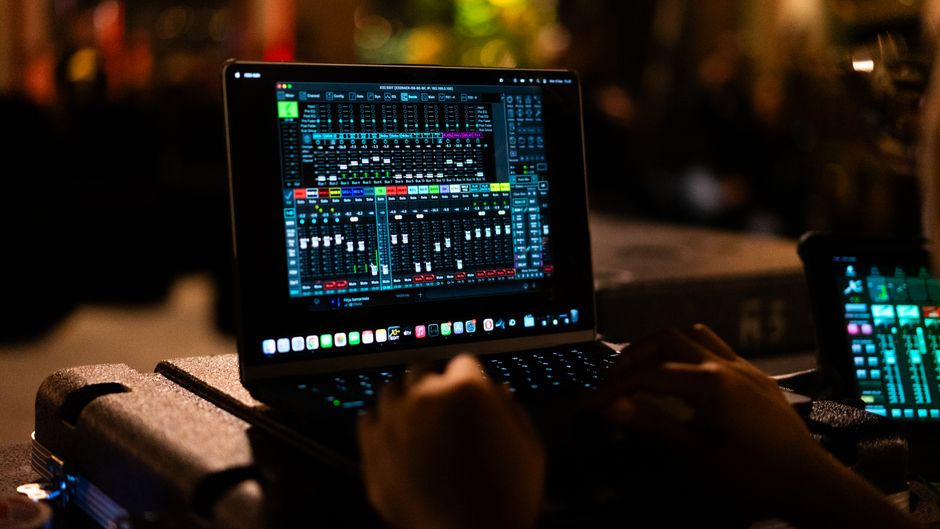
Photo by gabriel bodhi
Why Your Behringer Mixer Needs a Reliable USB Control Solution
You have just set up your Behringer mixer and are ready to mix a live stream or record a podcast. But without a smooth connection between your digital audio workstation and the mixer, every session becomes a battle with latency and clunky mouse clicks. A robust USB control software paired with the right hardware controller can transform your workflow. In 2026, musicians and audio engineers demand seamless integration, and the options span from compact budget units to professional-grade surfaces.
Getting the wrong setup leads to frustrating nights adjusting faders with a mouse instead of grabbing them physically. The difference between a productive session and a struggle often comes down to how well your controller and software talk to each other. Whether you are producing beats in a home studio or mixing live sound, a reliable USB control solution saves time and preserves your creative flow.
What makes a great USB control system for Behringer mixers? First, compatibility with your DAW and mixer firmware is critical. Second, the number of physical faders, knobs, and buttons determines how much control you have without reaching for the screen. Third, build quality and reliability matter when you are moving faders hundreds of times per session. Fourth, software mapping flexibility allows you to assign functions exactly as you need them.
The market in 2026 offers controllers across $49.99 – $109.00, with brands like delivering solutions for every budget. The trade-offs often come down to features versus portability, analog feel versus digital precision, and the depth of DAW integration. Some controllers favor deep customization while others offer plug-and-play simplicity.
This guide evaluates 10 USB controllers and software bundles to help you choose the right partner for your Behringer mixer. For more on setting up your studio, check out our Behringer mixer software setup guide.

2

3

4

5

6

7

8
9

10

Best USB Control Software for Behringer Mixers Buying Guide
Compatibility With Your DAW and Mixer
Before buying any controller, confirm that it supports your digital audio workstation and the specific Behringer mixer model. Some controllers use generic MIDI over USB and work with any DAW that accepts MIDI input. Others rely on proprietary software that integrates only with certain programs. Check the manufacturer’s compatibility list.
Many modern controllers come with their own control software that allows deep customization. Look for units that offer Mackie Control Universal or HUI emulation, as these protocols are widely supported. A good rule is to choose a controller whose software receives regular updates from the manufacturer. Refer to the USB MIDI specification from the MIDI Manufacturers Association for technical details.
Number of Physical Controls
More faders and knobs let you control more mixer channels simultaneously without switching pages. For a Behringer mixer with 16 or 32 channels, a controller with at least 8 faders is practical. Buttons for transport control, solo, mute, and record arm speed up editing. Evaluate how many controls you can comfortably reach during a session.
A controller with assignable endless knobs gives precise control over plugin parameters. Models with motorized faders provide visual feedback and recall session levels automatically. If you often mix live, prioritize tactile faders over touch-sensitive ones for faster reaction.
Build Quality and Portability
Plastic bodies keep weight down and cost low, but metal chassis withstand road travel and frequent use. Check the feel of faders and knobs before buying if possible. Units with rubber side grips and reinforced USB ports last longer. For studio use, weight matters less; for mobile recording, consider size and power requirements such as bus power over USB.
Also note how the controller connects to your computer. USB 2.0 is sufficient for MIDI data, but some advanced units require USB 3.0 for lower latency. Avoid controllers that need external power adapters if you frequently work on battery-powered laptops.
Software and Firmware Updates
A controller’s value depends on the software that drives it. Look for regular firmware updates that fix bugs and add DAW compatibility. Some manufacturers provide dedicated editor software for mapping every knob and button. Open-source alternatives also exist but may lack stability.
Check online forums and user reviews for common issues with the control software. A controller with active community support is often a safer long-term investment. Avoid models whose software has not been updated in over two years.
Value and Longevity
Entry-level controllers from $49.99 – $109.00 can get you started, but they may lack features like motorized faders or scribble strips. Mid-range models offer the best balance of durability and functionality. High-end controllers with touch-sensitive motor faders and full-color displays are ideal for professional studios but may be overkill for home mixing.
Consider how your needs might grow. A controller with expandable sections, like extender units, can grow with your setup. Investing in a well-built unit now saves you from buying a replacement in a year.
Which USB Controller Is Right for You?
Budget-conscious producers who want an affordable entry into hands-on mixing should look at the 24 Knobs, 16 Buttons, and Assignable Faders for Hands on DAW Control, for Music Production and Home Studios Akai Professional MIDImix USB MIDI Mixer Controller. With 24 knobs, 16 buttons, and assignable faders, this unit gives plenty of tactile control for under $110. It is bus-powered and works with most DAWs via USB. The large number of knobs make it great for tweaking plugin parameters during mixdown.
For those who need a compact, portable option for mobile recording or small studios, the Portable design. 43 backlit buttons, 8 channel faders with LED, 8 assignable endless knobs, ideal for DAW control Vangoa Wireless MIDI Controller Mixer, USB MIDI Keyboard for PC & Mac offers a unique wireless capability and 43 backlit buttons. Its 8 channel faders with LED and 8 assignable endless knobs provide solid control despite its compact size. Wireless connectivity reduces cable clutter on stage.
If you require a dedicated studio controller with VCA control and USB audio interface, the Behringer CONTROL2USB High-End Studio Control with VCA Control and USB Audio Interface delivers professional-grade control and seamless integration. Its high-end build and VCA control allow precise level matching across channels. The built-in USB audio interface simplifies your signal chain.
For experienced engineers who want to expand their mixing surface, the Behringer X-TOUCH EXTENDER X-TOUCH EXTENDER with 8 Touch-Sensitive Motor Faders, LCD Scribble Strips, USB Hub and Ethernet/USB Interfaces provides eight additional touch-sensitive motor faders and LCD scribble strips. This unit extends any existing X-TOUCH system or can be used standalone. The motorized faders recall session automation automatically.
For a single-channel control surface with a motorized fader and scribble strip, the Behringer X-TOUCH ONE Universal Control Surface with Touch-Sensitive Motor Fader and LCD Scribble Strip offers professional control in a compact footprint. It is ideal for producers who work with one channel at a time and need precise automation.
If you need a simple passive studio monitor controller without digital complexity, the Behringer STUDIO M Premium Passive Studio Controller provides clean signal routing and volume control. It does not require software or USB, making it a reliable choice for monitoring control.
For live recording to SD cards directly from your Behringer X32, the Behringer XLIVE X32 Expansion Card for 32 Channel Live Recording/Playback on SD/SDHC Cards and USB Audio/MIDI Interface is a must-have. It turns your mixer into a standalone recorder without a computer. The USB audio/MIDI interface also allows computer connection.
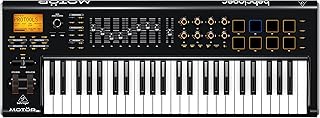
Keyboard players who need an integrated controller and DAW control should consider the Behringer MOTÖR 49. It combines a 49-key keyboard with motorized faders and transport controls, making it a two-in-one solution for producers who play keys and mix.
For a classic DAW controller with dedicated fader and transport buttons, the PreSonus FaderPort Classic USB DAW Controller offers a single motorized fader and a host of editing keys. It is compact and great for editing automation and mixing in tight spaces.
If you need a replacement power cord for a Behringer BCD3000 DJ controller, the AC Power Cord Outlet Socket Cable Plug Lead for Behringer BCD3000 DJ Deejay Mixer Machine Software Controller is a simple accessory that keeps your existing hardware running.
How We Choose These Products
We do not test products ourselves. Every product on this page comes from the catalogues of the retail and affiliate networks we work with, and the order reflects the data those catalogues publish: manufacturer specifications, customer rating and review counts, current price and the size of any discount.
Where this guide describes how a product performs, it is summarising what the manufacturer states and what customers report in public reviews, not our own measurements. Prices and availability change often, so check the retailer’s own page before buying. We earn a commission on purchases made through our links, at no extra cost to you.
Related Guides
- Best Tablet for Controlling Sound Mixers: Expert Picks in 2026
- Best Sub 100 USB Mixers of 2026
- USB Stereo Mixers Worth Buying in 2026
FAQs
Do I need special software to use a USB controller with my Behringer mixer?
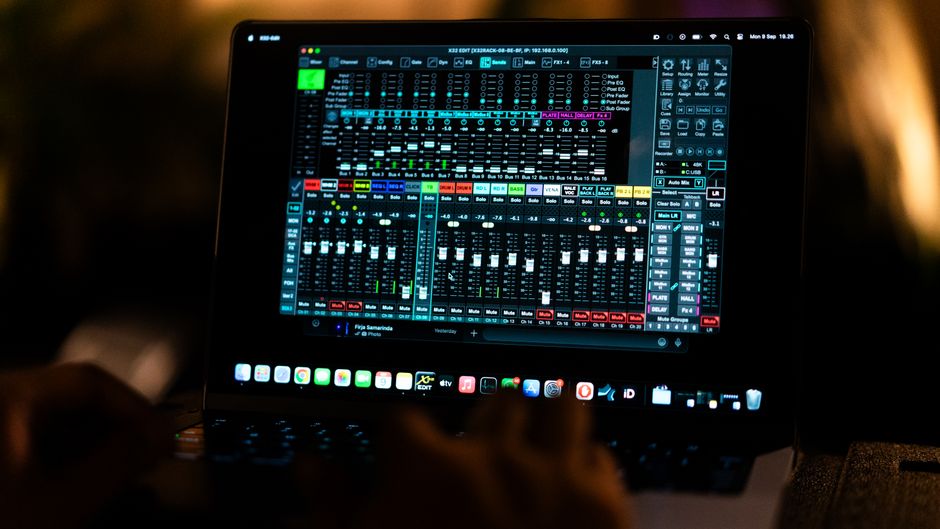
Most USB controllers send standard MIDI data that your DAW can interpret. However, to control Behringer mixer parameters directly, you may need the mixer’s own control software or a plugin like X-Air Edit. Some controllers come with mapping presets that simplify the process.
Can I use multiple controllers together with one mixer?
Yes, most DAWs allow multiple MIDI controllers connected simultaneously. You can assign different controllers to different mixer channels or functions. Behringer’s X-TOUCH range supports chaining via Ethernet for expanded control surfaces.
What is the difference between motorized and non-motorized faders?
Motorized faders move automatically to match the levels stored in your DAW session. They provide visual feedback and recall mix automation accurately. Non-motorized faders stay where you leave them and require manual adjustment. Motorized faders are preferred for mixing but add cost.
Will a controller with 8 faders work for a 32-channel mixer?
Yes, you can use banking or page switching to control all 32 channels with 8 faders. Look for controllers with dedicated bank buttons and clear channel labels. Some models like the Behringer X-TOUCH EXTENDER allow you to add more faders later.
How do I update firmware on my USB controller?
Most manufacturers provide a firmware updater tool on their website. Connect the controller via USB, run the updater, and follow the instructions. Regular updates fix bugs and improve DAW compatibility. For example, Behringer offers an update utility for their X-TOUCH series.
Are wireless controllers as reliable as wired ones?
Wireless controllers like the Vangoa model offer convenience but may introduce latency or dropouts in crowded RF environments. For critical live mixing, a wired USB connection is more reliable. Wireless works well for studio and home use where interference is minimal.
Final Verdict
After evaluating 10 USB controllers across $49.99 – $109.00, the market offers solutions for every workflow and budget. Whether you need a compact wireless controller for mobile mixing or a full-size surface with motorized faders for studio work, there is a suitable option among these models.
Our top overall pick is the 24 Knobs, 16 Buttons, and Assignable Faders for Hands on DAW Control, for Music Production and Home Studios Akai Professional MIDImix USB MIDI Mixer Controller. Its 24 knobs and assignable faders give exceptional hands-on control at a reasonable price, making it perfect for producers who want to step away from the mouse. The robust build and broad DAW compatibility seal the deal.
For best value, the Portable design. 43 backlit buttons, 8 channel faders with LED, 8 assignable endless knobs, ideal for DAW control Vangoa Wireless MIDI Controller Mixer, USB MIDI Keyboard for PC & Mac combines wireless convenience and a comprehensive set of controls at an entry-level price. For serious studio work, the Behringer X-TOUCH ONE Universal Control Surface with Touch-Sensitive Motor Fader and LCD Scribble Strip offers professional automation and scribble strip feedback in a compact form.

Join the discussion