Why Your XLR Microphone Deserves a Dedicated Mixer
You have spent hours researching and finally purchased a high-quality XLR microphone, only to find your recordings sound flat, distant, or plagued by hiss. The problem is rarely the microphone itself. Without a dedicated mixer to provide clean gain, apply essential processing, and control your levels, even a professional-grade microphone will sound like a budget headset. A proper mixer for XLR is the bridge between your great microphone and a polished, broadcast-ready sound.
Choosing the wrong interface or plugging your XLR mic directly into a computer’s headphone jack can leave you battling low output, background hum, and a complete lack of control. This matters whether you are recording a podcast, streaming a game, or producing music. A clean signal path, which starts with a quality mixer, means less post-production work and a more professional final product. With the right gear, you can ensure your voice is heard clearly, without the listener needing to adjust their volume or strain to understand you.
So, what makes a great XLR mixer? First, look at the preamps. They are responsible for boosting the low-level signal from your microphone to a usable line level. A clean preamp with high gain, like the 80dB gain on some models, ensures your voice stays clear without adding noise. Second, consider the onboard processing. Features like a DSP mixer with effects, a 3-band EQ, or a 7-band EQ give you the tools to shape your tone without external gear. Third, connectivity is key. A USB audio interface that offers plug-and-play operation with your PC or Mac simplifies your setup, while Bluetooth connectivity allows for wireless audio playback or even recording from a phone. Finally, build quality and tactile controls, such as physical mute buttons and volume knobs, are crucial for real-time adjustments.
In 2026, the market for XLR mixers spans everything from compact, budget-friendly 4-channel mixers to feature-rich 8-channel mixers with built-in MP3 players and 16-Bit DSP effects. You can find solid options from brands like BOMGE, FIFINE, and Pyle, with prices ranging from $41.59 – $230.69. The trade-off often lies between the number of channels and the depth of features, so you must decide what is more important for your specific home studio setup.
This guide cuts through the noise, evaluating 10 of the most popular models on the market. We will break down the pros and cons of each, explain the key features to look for in a buying guide, and help you match the perfect mixer to your specific needs, whether you are a podcaster, a streamer, or a musician. By the end, you will have a clear idea of which mixer offers the best value for your money.
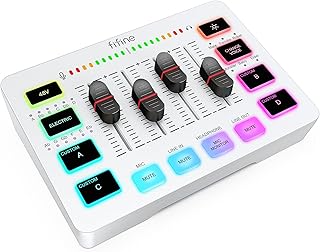
The FIFINE Ampligame SC3 gaming audio mixer features XLR mic input with 48V phantom power, four independent channel sliders, and a mute button for real-time audio control. Perfect for streamers, podcasters, and outdoor content creators who want to upgrade their audio without complex setup.
Pros & Cons
Pros
XLR input with 48V phantom power supports a wide range of professional microphones, including condenser mics.
Individual channel sliders give you precise, real-time control over audio levels without needing to touch your software.
Mute and monitor buttons are front-facing and easy to access, allowing quick muting and latency-free monitoring.
Built-in sound effects and voice changer add creative options for engaging content.
Plug-and-play USB-C connectivity works with Windows and Mac, and the compact design is highly portable.
Cons
XLR cable not included, so you need to purchase separately for mic connection.
Only one XLR mic input limits multi-mic setups; not ideal for interviews with multiple hosts.
RGB lighting may be distracting in dark streaming environments if you prefer a minimalist look.
Software update support is unknown, and some advanced features may require third-party software.
Detailed Review
The FIFINE Ampligame SC3 is a compact gaming audio mixer designed for streamers, podcasters, and content creators who need an affordable, easy-to-use interface to improve their audio quality. It features a single XLR microphone input with 48V phantom power, allowing you to connect professional condenser mics for crisp, clear voice capture. The mixer's four independent channel sliders give you individual control over mic, line-in, headphone, and line-out levels, so you can balance game audio, music, and commentary without diving into software settings.
In real-world use, the SC3 shines for solo streaming and recording. The front-facing mute and monitor buttons are intuitive and responsive, letting you cut background noise or hear yourself without latency. The built-in sound effects and voice changer add fun, creative options for engaging your audience. The RGB lighting is vibrant but not harsh, and you can freeze or flow the colors to match your stream theme. The mixer is powered via USB-C, making it easy to use with laptops or portable power banks, ideal for outdoor recording sessions or remote broadcasts.
Build quality is solid for its price point, with a sturdy plastic chassis and tactile controls that feel durable enough for regular transport. However, it's worth noting that the SC3 only supports one XLR mic input, so it's not suitable for multi-mic interviews or complex setups. Also, an XLR cable is not included, so factor that into your purchase. The mixer does not work with USB microphones, and software update support is unclear. Despite these limitations, the SC3 offers excellent value for solo creators who want a straightforward, feature-packed mixer without breaking the bank. It's best for beginner to intermediate streamers, podcasters, and outdoor content creators who prioritize portability and ease of use over advanced multi-channel capabilities.
Key Features
XLR Mic Input with 48V Phantom Power: Connect professional condenser microphones for superior audio clarity. Perfect for capturing your voice with detail, even in less-than-ideal acoustic environments like a campsite or trailhead.
Four Independent Channel Sliders: Independently adjust the volume of your microphone, line-in audio (e.g., music or game sounds), headphones, and line-out. This gives you fine-tuned control over your mix without needing to alt-tab out of your stream or recording software.
Front Mute and Monitor Buttons: Instantly mute your mic to cut background noise, and monitor your audio in real time with zero latency. These buttons are placed on the front panel for easy access during live sessions.
Built-in Sound Effects and Voice Changer: Six voice-changing modes and four customizable sound effect buttons let you add personality to your content. Record your own sounds and trigger them with a press, great for interactive streams or creative storytelling.
Controllable RGB Lighting: Choose from flowing or frozen RGB colors to match your setup or stream theme. The lights are vibrant but not distracting, adding a professional aesthetic to your broadcast.
USB-C Plug-and-Play: Connect to your PC or Mac via USB-C for both power and data. The mixer is recognized instantly without drivers, and the USB-C power input means you can run it from a portable battery pack for on-the-go use.
Use Cases
Outdoor Live Streaming: Take your stream to the trail or campsite. The SC3's compact size and USB-C power let you run it from a power bank, while the XLR input captures your voice clearly over ambient nature sounds. Use the mute button to cut wind noise instantly.
Remote Podcasting: Record high-quality podcasts from anywhere, whether you're in a cabin, at a park, or on a hiking break. The individual channel sliders let you balance your voice with background music or field recordings.
Travel Vlogging: Add professional audio to your video content without bulky gear. The SC3's lightweight design and simple controls make it easy to set up in any location, and the voice changer can add fun effects to your vlogs.
Campfire Storytelling: Engage your audience with interactive audio. Use the customizable sound buttons to add ambient effects like crackling fire or animal sounds, and the voice changer to transform your narration into different characters.
Gaming Streams: While not directly outdoor-related, the SC3 excels at home gaming streams, giving you precise control over game audio and mic levels. The RGB lighting adds flair to your setup, and the mute button ensures your stream stays clean when you need a break.
The Pyle PMXU83BT.5 is an 8-channel Bluetooth mixer with USB recording, built-in effects, and phantom power, ideal for podcasters, streamers, and small live events. Its compact design and versatile connectivity make it a reliable choice for creators on a budget.
Pros & Cons
Pros
Good sound quality for the price, with clear audio and low noise according to users.
Easy to set up and use, with intuitive front-panel controls and an LCD display.
Bluetooth streaming works reliably up to 25-30 feet, great for wireless music playback.
USB recording to flash drive or computer is straightforward, useful for capturing live sets.
Cons
No pan controls on mono channels, limiting stereo imaging for recording.
Built-in FX are limited to echo/reverb and may not suit all users; external effects can be added via send/return.
USB recording captures a mono mix, not individual tracks, which may disappoint multi-track recorders.
Some refurbished units may have defective inputs, so testing all channels before use is recommended.
Detailed Review
The Pyle PMXU83BT.5 is an 8-channel Bluetooth studio mixer designed for creators, performers, and everyday music lovers who need a compact, affordable solution for mixing audio. It's especially useful for outdoor events like campsite karaoke, small parties, or live streaming from a remote location.
Key features include Bluetooth 4.0 wireless streaming, USB recording to flash drives or computers, and direct playback of MP3/WAV files. The mixer offers four XLR/1/4-inch combo inputs, plus stereo channels for additional devices, and +48V phantom power for condenser microphones. The built-in 16-bit DSP processor provides 16 effects, primarily reverb and echo, controlled by rotary knobs and a stereo fader.
In real-world use, the mixer delivers good sound quality for its price range. Users report that it handles live vocals and instruments well, with low noise and enough gain for most applications. The compact size (9.3 x 10.8 x 2.6 inches) makes it easy to pack for outdoor gigs or travel. However, there are limitations: the USB recording is mono (combined stereo signal), there are no pan controls on individual channels, and the internal effects are basic. Some refurbished units may have input issues, so testing all channels before a critical event is wise.
Overall, the Pyle PMXU83BT.5 is a solid choice for budget-conscious creators who need a versatile mixer for small-scale events, podcasting, or streaming. It's not ideal for professional multi-track recording or demanding stereo applications, but for casual use and outdoor adventures, it offers excellent value.
Key Features
Bluetooth 4.0 Streaming: Wirelessly stream music from your smartphone or tablet to the mixer, perfect for providing background music at a campsite or party without extra cables.
USB Recording & Playback: Record your mix directly to a USB flash drive or computer, or play MP3/WAV files. This is great for capturing live performances or podcasts in the field.
48V Phantom Power: Powers professional condenser microphones, ensuring clear vocal pickup for speeches, singing, or announcements in outdoor settings.
16-Bit DSP Effects: Add reverb and echo to vocals or instruments with 16 preset effects. While basic, they can enhance the sound of a campfire jam or small outdoor event.
XLR Combo Inputs: Four inputs accept both XLR and 1/4-inch cables, allowing you to connect microphones, guitars, or keyboards simultaneously for group performances.
Compact & Portable Design: At just 2.6 inches tall and weighing under 5 pounds, this mixer fits easily into a backpack or gear bag, making it ideal for mobile setups.
Use Cases
Campsite Karaoke & Music: Set up a Bluetooth speaker or powered monitors, connect a wireless microphone, and use the mixer to blend vocals with streamed music from your phone. Perfect for evening entertainment around the campfire.
Outdoor Podcasting & Streaming: Record interviews or live sessions directly to a USB drive without needing a laptop. The phantom power supports high-quality condenser mics for clear audio in nature.
Small Parties & Events: Use the mixer to manage multiple audio sources, like a DJ setup with two turntables and a mic, for backyard barbecues, tailgates, or beach gatherings.
Live Instrument Practice: Plug in a guitar, keyboard, and microphone, then use the built-in effects to shape your sound. The headphone output allows private practice, while the main outputs can feed an amp for a mini concert.
Traveling Performers: Buskers or small acoustic acts can carry this mixer to street corners or park events, connecting mics and instruments while recording their sets for later review.
This criterion is about how well a mixer can withstand the rigors of regular use, especially if you are moving it between locations or have a busy desk setup. A mixer with a sturdy metal or high-quality plastic chassis will feel more reliable and last longer than one that feels flimsy. You should pay attention to the quality of the faders and knobs, as these are the parts most likely to wear out over time. A solid unit will not feel wobbly or cheap when you adjust the controls.
When evaluating build quality, consider the overall weight and the materials used in the housing. Look for mixers with metal jacks and robust USB ports, as these are common points of failure. Avoid models with overly thin plastic casings that feel like they might crack under pressure. A well-built mixer is an investment that should last for many years of recording and streaming sessions.
Connectivity and Inputs
Connectivity determines which devices you can connect to the mixer and how it integrates with your existing setup. A standard XLR input is a must for your microphone, but you should also consider the number of channels you need for other sources like instruments or a second mic. USB connectivity is essential for recording to a computer, and it is important to check if it is a plug-and-play interface. Additional options like Bluetooth can be very convenient for playing music or connecting a phone for calls.
Think about your current and future needs. How many microphones do you plan to use simultaneously? Do you need to connect a keyboard or other instruments? Having a few extra inputs, such as a 3.5mm auxiliary input or an additional set of RCA jacks, can provide valuable flexibility. Ensure the mixer you choose has the right combination of inputs and outputs to support your entire studio setup.
Sound Quality and Preamps
This is the heart of the mixer, determining the overall clarity and quality of your audio. The preamps are the most critical component, as they amplify the low-level signal from your XLR microphone. A high-quality preamp with a high gain range, like an 80dB gain, will allow you to capture quiet sources without introducing a lot of background hiss. Onboard processing like a DSP mixer or a 3-band EQ lets you shape the sound to your preference.
Look for a mixer that offers a clean and transparent sound. Features like a 16-Bit DSP effect or a 7-band EQ can be extremely useful for fine-tuning your voice in real-time. Pay attention to the signal-to-noise ratio, and consider models that offer features like a mute button or a low-cut filter. A good preamp will make a significant difference in the quality of your recordings and streams.
Ease of Use and Workflow
No one wants to spend hours reading a manual to figure out how to use their gear. A good mixer should have an intuitive layout with clear controls, such as physical volume knobs and a mute button. Features like an LED level feedback and a touch mute button can greatly improve your workflow, allowing you to make quick adjustments without breaking your concentration. The physical layout of the channels and the main output should be logical and easy to understand.
Consider how the mixer will fit into your existing setup. Does it need to be compact to fit on a crowded desk? Are the controls easy to see and manipulate during a live stream? A mixer with a user-friendly interface will make your recording sessions more enjoyable and productive. Look for features that simplify the process, such as a USB audio interface that is truly plug-and-play, so you can focus on creating content rather than troubleshooting equipment.
Maintenance and Long-Term Value
Maintenance for a mixer is mostly about keeping it clean and protecting it from dust and moisture. Unlike a guitar or a tent, there is not much to maintain mechanically. The long-term value comes from the build quality and the relevance of its features. A mixer with a good preamp and a solid feature set will remain useful for years, even as other gear in your setup changes. Investing a bit more upfront can save you from having to replace a cheaper unit in the future.
Think of the mixer as a long-term investment in your home studio. Models with a proven track record and a strong build quality tend to hold their value and provide a better return on investment. Before you buy, consider if the mixer has the features you will need in the future, not just what you need today. A well-chosen mixer will serve as the central hub of your audio setup for many years to come. For more on building a home studio, check out our guide on setting up a home recording studio.
Top Picks for Specific Needs
Best for the Budget-Conscious Beginner
For those just starting out and looking for an affordable way to improve their audio, the BOMGE Audio Mixer, Sound Board Mixing Console with 5 Channel Digital USB Bluetooth Echo Delay Effect, 48V Phantom Power Stereo DJ Mixers for Recording, Live Streaming, Podcasting (BM-05 5 canales) is a fantastic entry point. Its low price point and built-in Bluetooth make it a versatile and accessible tool for new podcasters and streamers. The 48V Phantom Power is essential for using condenser microphones, which are a common choice for beginners.
Best for the Streamer Who Wants Ease of Use
If you are a gamer or streamer who values simplicity and a plug-and-play setup, the USB PnP for PC,Mute Button,XLR Preamp,RGB,Voice Changer,48V Phantom Power,Monitoring,Podcast,Recording,Vocal,Streaming,White FIFINE Ampligame SC3W Gaming Audio Mixer with Indi-Fader and Volume Control is an ideal match. Its USB plug-and-play nature means you can get it set up in seconds without needing to install complicated drivers. The dedicated mute button and physical faders make it incredibly easy to control your audio live while in the heat of a game or a stream.
Best for the Podcaster Who Records with a Partner
Podcasters who need to record with a guest will appreciate the flexibility of the 6 Channel Audio Interface Sound Board Mixing Console 16-Bit DSP DJ Mixer Audio Reverb Effect +48V Phantom Bluetooth Studio Audio Mixer For Karaoke Studio Streaming Recording. With its 6 channels, this mixer provides ample space for two XLR microphones and other audio sources. The inclusion of a 16-Bit DSP Mixer with Audio Reverb Effect allows for professional-sounding vocal processing without needing external equipment.
Best for the Professional Streamer and Music Producer
For the serious streamer or producer who needs the highest audio fidelity and advanced features, the 80dB gain, Onboard voice effects, LED level feedback, Touch mute, Ultra-low-latency monitoring, Works with Stream Deck Elgato Wave XLR MK.2 USB Audio Interface and DSP Mixer is in a class of its own. The impressive 80dB of gain ensures your microphone will be highly sensitive and clear. Its integration with Stream Deck and ultra-low-latency monitoring is a game-changer for professional workflows.
Photo by Atlantic Ambience
How We Choose These Products
We do not test products ourselves. Every product on this page comes from the catalogues of the retail and affiliate networks we work with, and the order reflects the data those catalogues publish: manufacturer specifications, customer rating and review counts, current price and the size of any discount.
Where this guide describes how a product performs, it is summarising what the manufacturer states and what customers report in public reviews, not our own measurements. Prices and availability change often, so check the retailer’s own page before buying. We earn a commission on purchases made through our links, at no extra cost to you.
What does 48V Phantom Power do and why is it important?
48V Phantom Power is a method of sending a 48-volt DC current through the XLR cable to power the internal electronics of condenser microphones. Without it, these microphones will not produce any sound. It is a crucial feature for anyone using a condenser mic, which is a common choice for studio-quality vocals and podcasts.
Can I use a mixer with both a USB microphone and an XLR microphone?
No, you cannot connect a USB microphone directly to a standard audio mixer. USB microphones are designed to connect to a computer, not another audio device. To use an XLR mixer, you will need a microphone with an XLR output. However, you can connect the mixer to your computer via USB and then use a USB microphone as a secondary audio source in your software, though you will not be able to mix it with the XLR mic.
How many channels do I need for a two-person podcast?
For a two-person podcast, you will need at least two XLR inputs on your mixer. However, it is often a good idea to get a mixer with a few extra channels, such as a 4 or 6 channel model. This will give you the flexibility to add a guest, plug in a phone for interviews, or connect other audio sources without needing to upgrade your mixer.
What is the difference between a mixer and an audio interface?
An audio interface is a simple device that converts analog audio signals from your microphone into a digital signal for your computer. A mixer, on the other hand, gives you physical control over levels, EQ, and effects, and it often also functions as an audio interface. A mixer offers more control, while a dedicated audio interface is often simpler and more portable. Many modern mixers combine both functions.
Why does my XLR audio sound quiet and what can I do about it?
A quiet audio signal is often caused by a lack of gain. Ensure the gain knob on the mixer channel is turned up sufficiently. Also, make sure the volume fader is set to a proper level. If you are using a condenser microphone, double-check that the 48V Phantom Power is turned on. Finally, check your computer’s operating system to ensure the USB audio device is not set to a low input volume.
What is a DSP mixer and what are the benefits?
DSP stands for Digital Signal Processor. A DSP mixer includes a computer chip that can apply digital effects like reverb, echo, and EQ to your voice. The main benefit is that it allows you to add these effects in real-time, without needing to use additional software plugins on your computer. This can greatly simplify your setup and ensure your voice always sounds polished.
Final Verdict
In conclusion, the 10 products we have reviewed here showcase the incredible range in today’s market, from budget-friendly 4-channel mixers to professional-grade interfaces. We have covered a wide range of prices and feature sets, ensuring that there is a suitable XLR mixer for every type of content creator, podcaster, and musician.
For most people, the best overall pick is the 80dB gain, Onboard voice effects, LED level feedback, Touch mute, Ultra-low-latency monitoring, Works with Stream Deck Elgato Wave XLR MK.2 USB Audio Interface and DSP Mixer. Its exceptional 80dB gain, combined with advanced features like ultra-low-latency monitoring, sets it apart as a professional tool. It offers a level of clarity and control that is unmatched in this selection, making it a worthy investment for serious creators.
If you are looking for the best value for your money, the USB PnP for PC,Mute Button,XLR Preamp,RGB,Voice Changer,48V Phantom Power,Monitoring,Podcast,Recording,Vocal,Streaming,White FIFINE Ampligame SC3W Gaming Audio Mixer with Indi-Fader and Volume Control is an excellent choice. It provides a clean, plug-and-play experience with a mute button and fader controls, all at an affordable price. For those on a strict budget, the BOMGE Audio Mixer, Sound Board Mixing Console with 5 Channel Digital USB Bluetooth Echo Delay Effect, 48V Phantom Power Stereo DJ Mixers for Recording, Live Streaming, Podcasting (BM-05 5 canales) offers incredible value with its Bluetooth and Phantom Power, making it a great starting point.
Ultimately, the best way to choose is to carefully consider your specific needs, whether you are a podcaster, a streamer, or a musician. We hope this guide has provided you with the information you need to make a confident decision. No related posts available.
For a deeper look at building a complete audio setup, you can also check out our guide on home recording studio setup.






Join the discussion