A glitchy audio interface or static-filled recording can derail an entire session, especially when you are in the middle of a live stream or laying down a critical track. For PC users, a reliable digital mixer is the backbone of clean, professional sound, yet the market is flooded with options that vary wildly in features and quality. Whether you are a gamer, podcaster, or musician, the right mixer can transform your workflow and audio clarity.
Choosing a mixer that connects seamlessly with your computer means looking beyond simple channel counts. You need to consider how it handles signal routing, what kind of digital processing it offers, and whether it supports your specific use case, be it recording, streaming, or live sound reinforcement. A poor choice leads to latency, noise, and frustration; a well-chosen one lets you focus on creativity.
What makes a great digital mixer for a CPU? First, connectivity matters: USB audio interfaces are standard, but Bluetooth and built-in MP3 players add flexibility. Second, effects processing, such as DSP reverb or compression, saves you from external gear. Third, channel count and EQ control determine how many sources you can mix and how precisely you can shape the sound. Finally, phantom power is essential for condenser microphones.
The 2026 market offers mixers from $69.99 – $699.00, with options from brands like PyleUSA, ALTO. You will find everything from budget four-channel units for basic streaming to professional consoles with touch faders and multi-track recording via USB. The trade-off often lies between raw channel capacity and advanced digital features.
Below, you will find a buying guide, tailored recommendations, and answers to common questions. If you are also exploring studio monitors or microphones, check out our best studio monitors review for complementary gear.
The ALTO TMD16 is a 16-channel digital mixer with capacitive touch faders, onboard FX, and Bluetooth control, ideal for musicians and venues seeking intuitive live sound mixing without complex menus.
Pros & Cons
Pros
Intuitive hands-on control with touch faders and color display reduces learning curve for analog users.
Onboard parametric EQ and compression on all channels provide studio-quality sound shaping without external processors.
Flexible routing with 4 aux sends and 4 subgroups makes it easy to create custom monitor mixes and effect loops.
Compact footprint (16.9" wide) fits on crowded stages or small tables while still offering 16 channels.
Cons
No motorized faders means scene recall does not physically move faders, which may confuse some users during live changes.
Bluetooth range for app control is limited to about 30 feet, requiring you to stay close to the mixer for wireless adjustments.
Lack of built-in Wi-Fi or Ethernet control means remote mixing is only available via Bluetooth, not over a network.
Detailed Review
The ALTO TMD16 is a 16-channel digital mixer designed for live sound applications in small venues, rehearsal spaces, houses of worship, and event centers. It combines intuitive tactile controls with powerful digital processing, making it accessible to users who may not have professional engineering experience.
Key features include 10 pristine digital mic preamps, 100mm capacitive touch faders, a 7-inch color display, and onboard effects with 16 presets. The mixer also offers USB audio interface functionality for recording or livestreaming, plus Bluetooth for audio playback and remote control via the Alto Mix Control App.
In real-world use, the TMD16 excels at providing immediate, hands-on control. The faders and encoders respond smoothly, and the display shows clear metering and parameter values. The built-in EQ and compression allow you to shape sound without external gear, and the FX engine adds polish to vocals and instruments. Scene recall is straightforward, though note that faders are not motorized, so recalled scenes will show different physical fader positions.
Build quality is solid with a metal chassis that feels road-ready, and the compact size makes it easy to transport. The weight of 5.45 kg is manageable for one person to carry. Connectivity is ample with XLR main outputs, 4 aux sends, and USB.
Limitations include the lack of motorized faders, which may be a downside for users who rely on visual feedback from fader positions. Bluetooth range for the app is limited, so you need to stay close for wireless control. Additionally, there is no Wi-Fi or Ethernet networking option for remote mixing.
Overall, the ALTO TMD16 is a strong choice for musicians, houses of worship, and small venue operators who want a digital mixer with tactile control and essential features without breaking the bank. It is less suited for large-scale productions that require motorized faders or extensive network control.
Key Features
16-Channel Digital Mixer: With 10 digital mic preamps and versatile inputs, you can connect multiple microphones, instruments, and line sources for a full live mix.
Tactile Hands-On Control: 100mm capacitive touch faders and dedicated encoders give you instant, intuitive command over your mix without needing a tablet or complex menu navigation.
Onboard Studio Processing: Built-in 3-band parametric EQ and compression on each input, plus a 7-band graphic EQ on all outputs, let you shape sound precisely. The 16-preset FX engine adds reverb, delay, and chorus, eliminating the need for external processors.
USB & Bluetooth Connectivity: Record your mix or livestream directly to a computer via USB. Stream audio wirelessly from a phone or tablet, and control the mixer remotely using the Alto Mix Control App.
Instant Scene Recall: Save entire mix settings as presets for lightning-fast setup and consistent sound at every gig, service, or event.
Flexible Signal Routing: Four dedicated aux sends, four subgroups, and professional XLR main outputs allow you to create custom monitor mixes and effects loops effortlessly.
Compact and Road-Ready: A durable metal chassis ensures reliability on the go, while the lightweight, portable design makes it easy to transport to rehearsals and shows.
Use Cases
Small Venue Gigs: Perfect for bars, clubs, and coffeehouses where a compact, intuitive mixer is needed to handle vocals and instruments for a band or solo act. The tactile faders allow quick adjustments during a set.
Houses of Worship: Ideal for churches and religious centers that need reliable, easy-to-use sound for services. Scene recall ensures consistent mixes for different speakers or music teams.
Rehearsal Spaces: Bands and music groups can use the TMD16 to capture rehearsals via USB recording, and the built-in FX helps shape sound without additional gear.
Livestreaming and Recording: The USB audio interface makes it simple to connect to a computer for livestreaming performances or recording demos, with Bluetooth allowing wireless audio playback for intermission music.
Event Centers and Meeting Rooms: For corporate events, conferences, or community gatherings, the TMD16 provides clear, controllable audio for microphones and presentations, with easy setup and teardown.
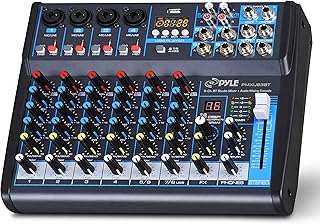
The Pyle PMXU43BT is a 4-channel Bluetooth audio mixer that combines wireless streaming with USB/MP3 playback and studio-grade features like 48V phantom power and 16-bit DSP effects, making it ideal for mobile DJs, bands, and karaoke setups needing a compact, rugged mixing solution.
Pros & Cons
Pros
Bluetooth connectivity allows cable-free audio streaming from any device, simplifying setup in outdoor environments.
USB/MP3 playback provides a backup music source without needing a laptop or smartphone.
48V phantom power enables use of high-quality condenser mics for superior vocal clarity.
Rugged steel construction and sealed controls enhance durability against dust and grime.
Cons
Limited to 4 channels, which may not be sufficient for larger bands or complex multi-microphone setups.
No built-in rechargeable battery; requires AC power or an external inverter for portable use.
Basic EQ (3-band) may not satisfy audiophiles needing more precise tonal control.
Detailed Review
The Pyle PMXU43BT is a 4-channel Bluetooth audio mixer designed for musicians, DJs, and content creators who need a portable, feature-rich mixing solution. Its compact steel chassis and lightweight build (2.9 pounds) make it easy to transport to outdoor gigs, camping trips, or studio sessions.
Key features include Bluetooth wireless streaming, USB/MP3 playback, 48V phantom power for condenser microphones, and 16-bit DSP effects. In real-world use, the Bluetooth connection is stable up to about 30 feet, allowing you to stream music from a phone or tablet without cables. The USB port accepts flash drives for instant track playback, which is handy when you don't want to rely on a computer. The 3-band EQ on each channel provides basic tone shaping, while the DSP effects add reverb or delay to vocals or instruments.
Build quality is solid with a rugged steel chassis and sealed rotary controls that resist dust and grime, making it suitable for outdoor environments like park concerts or beach parties. However, the mixer requires an AC power source (100-240V adapter included), so you'll need a generator or inverter for remote use. The four channels may feel limiting for larger bands, and the EQ is basic compared to professional consoles. Overall, the Pyle PMXU43BT is a great value for solo performers, small bands, and podcasters seeking an affordable, versatile mixer with modern connectivity.
Key Features
Bluetooth Wireless Streaming: Stream audio from any Bluetooth-enabled device up to 30 feet away, eliminating cable clutter and simplifying setup at outdoor events.
USB/MP3 Playback: Play music directly from a USB flash drive or connect to a computer for recording, giving you multiple audio sources without extra gear.
48V Phantom Power: Powers professional condenser microphones for clear, detailed vocal capture, essential for live performances or recording.
3-Band EQ per Channel: Adjust bass, mid, and treble frequencies to tailor your sound for vocals, instruments, or backing tracks.
16-Bit DSP Effects: Add reverb, delay, or other effects to enhance audio quality and create a more polished live sound.
Rugged Steel Chassis: Durable construction with sealed rotary controls protects against dust, moisture, and accidental bumps, ensuring reliability on the road or trail.
Use Cases
Outdoor Live Performances: Ideal for small bands or solo artists playing at campgrounds, parks, or beach parties. Bluetooth streaming lets you play backing tracks from a phone, while phantom power supports high-quality mics for vocals.
Campfire Karaoke: Set up a karaoke station at your campsite using the USB/MP3 player for backing tracks and a couple of microphones. The DSP effects add fun reverb to voices.
Podcasting or Recording in Nature: Use the mixer to capture multiple audio sources, like a host mic and a guest mic, while recording directly to a computer via USB. The rugged build handles dusty or humid conditions.
Mobile DJ Gigs: Perfect for DJs who need a compact mixer for small parties or weddings. Bluetooth allows wireless music control from a tablet, and the EQ helps fine-tune the sound for different venues.
Best Digiatal Mixers for a Cpu Buying Guide
Channel Count and Connectivity
The number of channels determines how many microphones, instruments, or line-level sources you can connect simultaneously. For a solo podcast or gaming stream, four channels may suffice. For a band or multi-mic setup, look for at least eight. Equally important is the type of connection to your computer: USB class-compliant interfaces are plug-and-play on Windows and Mac, while some mixers offer Bluetooth for wireless audio input.
When comparing channel counts, pay attention to how many XLR inputs with 48V phantom power are included. Many mixers combine XLR and 1/4″ jacks on the same channel. Also, note whether the mixer can function as a standalone audio interface without additional drivers. This is critical for reducing latency and ensuring compatibility with your DAW or streaming software.
Digital Signal Processing and Effects
Built-in DSP effects, such as reverb, delay, and compression, can save you from using external processors or software plugins. They are especially useful for livestreaming where you need real-time processing without taxing your CPU. Some mixers offer 16-bit or 24-bit processors, with the number of preset effects ranging from 16 to 99. Higher DSP quality reduces audio artifacts.
Consider whether the effects are global or can be assigned per channel. Some mixers allow you to apply effects to individual channels, giving you more control. Also, check if the mixer includes a mute button or independent monitor control. For streaming, features like noise reduction or a dedicated headphones output are valuable.
Build Quality and Portability
A mixer that will sit on your desk or be moved between gigs needs solid construction. Look for metal chassis, robust knobs, and secure connections. Weight can be a factor if you travel, but heavier mixers often have better shielding against interference. The layout of faders, knobs, and buttons should be intuitive for quick adjustments.
For desktop use, consider the footprint. A long, wide mixer may not fit under a monitor. Some models feature a compact design with built-in stands. Additionally, check if the mixer comes with a power supply or can be powered via USB bus power; the latter is convenient for mobile setups but may limit output volume.
Integration with PC and Software
Modern digital mixers often include USB audio interfaces that allow multi-track recording directly to your computer. The number of recording channels varies: some mixers send only the master mix, while others send individual channels. For podcasting or music production, multi-track capability is preferable. Also, check if the mixer supports ASIO drivers for low latency.
Some mixers offer control via dedicated software or mobile apps, enabling you to adjust levels, EQ, and effects from a tablet or phone. This can be a game changer for live sound or remote setups. When evaluating, read user reviews about driver stability and latency performance with common DAWs like Ableton Live or OBS Studio.
Phantom Power and Microphone Preamps
If you use condenser microphones, 48V phantom power is non-negotiable. Most mixers have a global phantom power switch that applies to all XLR inputs. Some offer independent switches per channel, which is useful when mixing dynamic and condenser mics. The quality of the preamps matters: clean, low-noise preamps preserve the clarity of your voice or instrument.
Look for a mixer with a high gain range, typically 40-60 dB, to accommodate low-output microphones. S/N ratio (signal-to-noise) is also important; a ratio above 90 dB is good. If you are recording quiet sources like acoustic guitar, invest in a mixer with preamps known for low self-noise. For more in-depth audio gear reviews, read our best audio interfaces comparison.
For authoritative guidance on studio setups, refer to the Sound On Sound mixer buying guide, which covers technical specifications in depth.
Photo by Nicolas Foster
Which Best Digiatal Mixers for a Cpu Is Right for You?
Budget-conscious creators who need an affordable entry point into computer mixing should consider the 4 Channel DJ Mixer for Recording & Streaming, USB Drive, Media Playback, PC Audio Interface, EQ Control, 48V Phantom Power 4 Channel Audio Mixer, 99 DSP Effects Sound Board Console. Priced at $69.99, it offers 99 DSP effects, USB connectivity, and phantom power, making it a cost-effective solution for podcasting or basic streaming without breaking the bank.
For gamers and streamers who require advanced routing for dual PC setups, the Mixer with 4 Faders, 3 Submixes, dual PC setup, Noise Reduction, 57dB XLR input, Windows Arena control for Gamers & Streamers MAONO G3 Gaming Audio Mixer with Map Any Audio Sources for PC Streaming is tailored specifically for that environment. Its 3 submixes and noise reduction feature help streamline complex audio workflows, and the dedicated Windows Arena control gives you direct access to settings.
Those seeking professional-grade control with a visual interface will appreciate the 7″ Display, Touch Faders, EQ, FX, App Control, for Live Sound Mixing and Practice Spaces ALTO TMD16 16-Channel Digital Mixer with Bluetooth. With its touch faders and 7-inch display, this mixer provides intuitive control over 16 channels and includes app-based remote management, perfect for serious musicians and venue owners.
For users who need a versatile all-rounder with Bluetooth and MP3 playback, the Pyle Professional 6 Channel Audio Mixer with Bluetooth – DJ Sound Board – USB Computer Input – Built-in MP3 Player – 48V Phantom Power – 3 Band EQ – 16-Bit DSP FX – Band, Studio Ready – PMXU63BT (priced at $91.99) strikes a balance between features and affordability. Its 6 channels, Bluetooth input, and 16-bit DSP effects cover most home studio and live streaming needs.
Photo by Pixabay
How We Choose These Products
We do not test products ourselves. Every product on this page comes from the catalogues of the retail and affiliate networks we work with, and the order reflects the data those catalogues publish: manufacturer specifications, customer rating and review counts, current price and the size of any discount.
Where this guide describes how a product performs, it is summarising what the manufacturer states and what customers report in public reviews, not our own measurements. Prices and availability change often, so check the retailer’s own page before buying. We earn a commission on purchases made through our links, at no extra cost to you.
Can I use a regular analog mixer with my computer?
Yes, but you will need an external audio interface to convert the analog signal to digital. Most modern digital mixers include a built-in USB interface, which simplifies the connection. For best results, choose a mixer labeled as a USB audio interface that supports your operating system.
What is the difference between a mixer and an audio interface?
A mixer lets you adjust levels, EQ, and effects on multiple inputs before sending the signal to a recording device. An audio interface primarily converts analog signals to digital for a computer and provides high-quality preamps. Many digital mixers combine both functions, offering the flexibility of mixing while acting as an interface.
Do I need a mixer if I only stream with one microphone?
Not necessarily; a simple USB microphone or a single-channel audio interface may suffice. However, a mixer gives you more control over audio processing (EQ, compression) and allows you to easily add a second microphone, sound effects, or background music without changing your setup.
How many channels should I look for in a mixer for a home studio?
For a solo podcaster or musician, 4 channels is often enough (one mic, one instrument, plus stereo line inputs). For a small band or if you plan to record multiple microphones simultaneously, consider 8 or more channels. Always leave room for future expansion.
Are Bluetooth mixers reliable for live streaming?
Bluetooth can introduce slight latency, which may be noticeable during live performance or real-time streaming. For best quality, use a wired USB connection. Bluetooth is fine for playing background music or taking phone calls, but not recommended for primary vocal or instrument input due to potential dropouts.
What does 48V phantom power do?
Phantom power provides +48 volts to condenser microphones, which need external power to operate. It is a standard feature on most mixers and audio interfaces. Always check that your mixer has phantom power if you use condenser mics. Dynamic microphones do not require it and are not affected when it is turned on.
Final Verdict
After reviewing 10 digital mixers across a $69.99 – $699.00 range, the landscape offers solid options for every budget and use case. From simple four-channel units ideal for entry-level streaming to advanced consoles with touch displays for professional production, there is a mixer to match your computer audio needs.
Our top overall pick is the 7″ Display, Touch Faders, EQ, FX, App Control, for Live Sound Mixing and Practice Spaces ALTO TMD16 16-Channel Digital Mixer with Bluetooth. It stands out with its 7-inch color display, capacitive touch faders, and comprehensive app control, which together provide an intuitive mixing experience. With 16 channels, Bluetooth streaming, and a 4.9-star user rating, it delivers exceptional value for those who demand professional features in a computer-based setup.
For budget buyers, the 4 Channel DJ Mixer for Recording & Streaming, USB Drive, Media Playback, PC Audio Interface, EQ Control, 48V Phantom Power 4 Channel Audio Mixer, 99 DSP Effects Sound Board Console at $69.99 offers an unbeatable price-to-feature ratio with 99 DSP effects and USB connectivity. If you need a dedicated gaming and streaming mixer, the Mixer with 4 Faders, 3 Submixes, dual PC setup, Noise Reduction, 57dB XLR input, Windows Arena control for Gamers & Streamers MAONO G3 Gaming Audio Mixer with Map Any Audio Sources for PC Streaming is purpose-built for that environment. For a broader look at audio gear, see our best DAW controllers guide.
Nolan covers clothing and accessories, where seasonal markdowns arrive on a schedule and the same item can carry three different prices in a fortnight.





Join the discussion