1
Best 16 Channel Digital Mixers List Worth Buying in 2026

By Curtis Vance
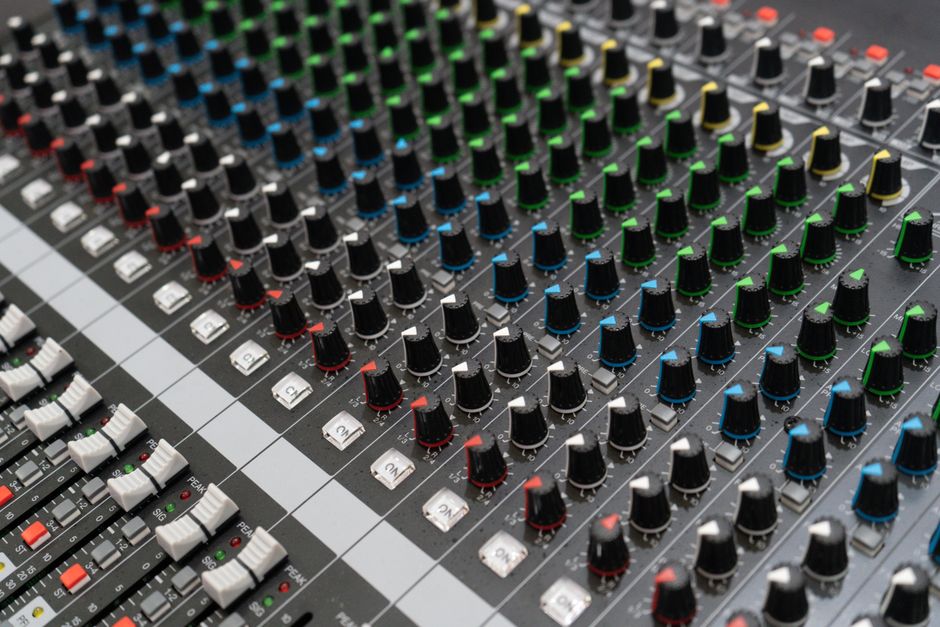
Photo by Kishan Rahul Jose
You are setting up a live sound system for a small venue, and the mixer you choose determines whether the band sounds crisp or muddy. With 10 channels, digital connectivity, and on-board effects, a 16-channel mixer can handle a full band setup, multiple microphones, and backing tracks. The right one saves you hours of troubleshooting during soundcheck.
Using a mixer that doesn’t meet your needs leads to frustrated musicians, muddy monitors, and a less professional show. A digital 16-channel mixer gives you recallable settings, built-in compression, and direct USB recording, making it easier to capture your performance and tweak it later.
A good 16-channel digital mixer should offer enough input channels for your current setup plus room to grow. Look for a mixer with reliable preamps, flexible routing, and easy-to-use EQ and effects. For live use, a durable metal chassis and clear display matter. For studio work, seamless USB audio interface integration is key. Weight and portability also factor in if you move your gear often.
In 2026, the market for 16-channel digital mixers spans a wide $2.00 – $699.00, from budget-friendly models to professional consoles. Brands like ALTO offer various options, each with trade-offs between channel count, effects processing, and control surfaces. Understanding these trade-offs helps you make a confident purchase.
This guide covers 10 carefully selected 16-channel digital mixers, evaluated on sound quality, build, connectivity, effects, and price. Whether you are a weekend warrior band, a church tech director, or a home studio enthusiast, you will find the right mixer below. For more on related gear, check out our best audio interfaces guide.

2

The ALTO TMD16 is a 16-channel digital mixer with capacitive touch faders, onboard FX, and Bluetooth control, ideal for musicians and venues seeking intuitive live sound mixing without complex menus.
Pros & Cons
Pros
- Intuitive hands-on control with touch faders and color display reduces learning curve for analog users.
- Onboard parametric EQ and compression on all channels provide studio-quality sound shaping without external processors.
- Flexible routing with 4 aux sends and 4 subgroups makes it easy to create custom monitor mixes and effect loops.
- Compact footprint (16.9" wide) fits on crowded stages or small tables while still offering 16 channels.
Cons
- No motorized faders means scene recall does not physically move faders, which may confuse some users during live changes.
- Bluetooth range for app control is limited to about 30 feet, requiring you to stay close to the mixer for wireless adjustments.
- Lack of built-in Wi-Fi or Ethernet control means remote mixing is only available via Bluetooth, not over a network.
Detailed Review
The ALTO TMD16 is a 16-channel digital mixer designed for live sound applications in small venues, rehearsal spaces, houses of worship, and event centers. It combines intuitive tactile controls with powerful digital processing, making it accessible to users who may not have professional engineering experience.
Key features include 10 pristine digital mic preamps, 100mm capacitive touch faders, a 7-inch color display, and onboard effects with 16 presets. The mixer also offers USB audio interface functionality for recording or livestreaming, plus Bluetooth for audio playback and remote control via the Alto Mix Control App.
In real-world use, the TMD16 excels at providing immediate, hands-on control. The faders and encoders respond smoothly, and the display shows clear metering and parameter values. The built-in EQ and compression allow you to shape sound without external gear, and the FX engine adds polish to vocals and instruments. Scene recall is straightforward, though note that faders are not motorized, so recalled scenes will show different physical fader positions.
Build quality is solid with a metal chassis that feels road-ready, and the compact size makes it easy to transport. The weight of 5.45 kg is manageable for one person to carry. Connectivity is ample with XLR main outputs, 4 aux sends, and USB.
Limitations include the lack of motorized faders, which may be a downside for users who rely on visual feedback from fader positions. Bluetooth range for the app is limited, so you need to stay close for wireless control. Additionally, there is no Wi-Fi or Ethernet networking option for remote mixing.
Overall, the ALTO TMD16 is a strong choice for musicians, houses of worship, and small venue operators who want a digital mixer with tactile control and essential features without breaking the bank. It is less suited for large-scale productions that require motorized faders or extensive network control.
Key Features
16-Channel Digital Mixer: With 10 digital mic preamps and versatile inputs, you can connect multiple microphones, instruments, and line sources for a full live mix.
Tactile Hands-On Control: 100mm capacitive touch faders and dedicated encoders give you instant, intuitive command over your mix without needing a tablet or complex menu navigation.
Onboard Studio Processing: Built-in 3-band parametric EQ and compression on each input, plus a 7-band graphic EQ on all outputs, let you shape sound precisely. The 16-preset FX engine adds reverb, delay, and chorus, eliminating the need for external processors.
USB & Bluetooth Connectivity: Record your mix or livestream directly to a computer via USB. Stream audio wirelessly from a phone or tablet, and control the mixer remotely using the Alto Mix Control App.
Instant Scene Recall: Save entire mix settings as presets for lightning-fast setup and consistent sound at every gig, service, or event.
Flexible Signal Routing: Four dedicated aux sends, four subgroups, and professional XLR main outputs allow you to create custom monitor mixes and effects loops effortlessly.
Compact and Road-Ready: A durable metal chassis ensures reliability on the go, while the lightweight, portable design makes it easy to transport to rehearsals and shows.
Use Cases
Small Venue Gigs: Perfect for bars, clubs, and coffeehouses where a compact, intuitive mixer is needed to handle vocals and instruments for a band or solo act. The tactile faders allow quick adjustments during a set.
Houses of Worship: Ideal for churches and religious centers that need reliable, easy-to-use sound for services. Scene recall ensures consistent mixes for different speakers or music teams.
Rehearsal Spaces: Bands and music groups can use the TMD16 to capture rehearsals via USB recording, and the built-in FX helps shape sound without additional gear.
Livestreaming and Recording: The USB audio interface makes it simple to connect to a computer for livestreaming performances or recording demos, with Bluetooth allowing wireless audio playback for intermission music.
Event Centers and Meeting Rooms: For corporate events, conferences, or community gatherings, the TMD16 provides clear, controllable audio for microphones and presentations, with easy setup and teardown.
3

4

5

6

7

8

9

10

Best 16 Channel Digital Mixers List Buying Guide
Channel Count and Routing Flexibility
A 16-channel mixer gives you plenty of inputs for a full band, including microphones, line-level instruments, and stereo sources. But beyond the number of channels, look at how you can route signals. Some mixers allow you to assign any input to any bus, sub-group, or aux send, which is invaluable for live monitoring and recording. A mixer with flexible routing lets you create separate monitor mixes, feed a recording interface, and send effects to specific channels.
When comparing mixers, check the number of aux sends (for stage monitors), the availability of direct outputs, and whether the USB interface supports multitrack recording. A good digital mixer will let you recall your entire setup next time, saving setup time.
Built-in Effects and Processing
Digital mixers often include effects like reverb, delay, chorus, and compression. The quality and number of effects can vary widely. Some mixers offer dedicated FX processors with multiple algorithms, while others provide a simpler set. On-board effects eliminate the need for external processors, but not all sound great. Look for mixers with editable parametric EQ on each channel and at least one built-in compressor per channel for live sound.
For live use, having a dedicated effects section that is easy to adjust on the fly is important. For studio use, the ability to process audio via USB and apply effects in your DAW might matter more. Consider how much you rely on outboard gear vs. internal effects.
Connectivity and USB Audio Interface
Modern digital mixers double as USB audio interfaces. The critical spec is how many channels are sent over USB. Some mixers send only the master stereo mix, while others send all individual channels (multitrack). If you record live shows or multi-track in the studio, a mixer with multitrack USB recording is essential. Look for at least 16×4 or 16×8 USB audio capability.
Also check the type of USB (Type B or Type C) and compatibility with your computer. Bluetooth connectivity for streaming backing tracks or control via app is a nice bonus. Some mixers include AUX inputs, RCA, and even SD card recording. Think about your typical workflow and choose the one that fits.
Build Quality and Portability
A mixer that travels needs a rugged metal chassis, secure knob caps, and reinforced jacks. Look for models with a molded handle or rack-mountability. Weight matters if you carry it up stairs or between venues. A well-built mixer lasts years even with regular transport. Some mixers have a large display or touchscreen, which adds convenience but also bulk. Consider your storage space.
Read reviews about the reliability of power supplies and faders. Many digital mixers have motorized faders that can be recalled; these are more delicate than analog faders. Make sure the mixer is designed for the environment you will use it in (e.g., outdoor stage vs. control room).
Price and Value
Prices for 16-channel digital mixers range from budget-friendly options under $200 to premium consoles over $700. Your budget should align with your needs. A cheaper mixer may have limited effects, fewer routing options, or lower sound quality. Conversely, an expensive mixer might have features you never use. Identify your must-haves (like multitrack recording, high-quality preamps, or a specific number of aux sends) and find the best value that meets those needs.
Consider future-proofing: a mixer with a few extra channels or expansion options (like ADAT or Dante) can grow with you. But don’t overspend on features you will not use in the next few years.
Which Best 16 Channel Digital Mixers List Is Right for You?
For the drummer or keyboardist who needs a portable mixer with large touchscreen and app control, the 7″ Display, Touch Faders, EQ, FX, App Control, for Live Sound Mixing and Practice Spaces ALTO TMD16 16-Channel Digital Mixer with Bluetooth delivers an intuitive interface and 4.9/5 rating. It is ideal for musicians who want to mix from the stage or control the sound via an app.
If you are a worship band or a small venue that needs reliable analog-style operation with built-in effects, the Yamaha MG16XU 16-Input 6-Bus Mixer with Effects is a proven workhorse. With 312 reviews and a 4.4 rating, it offers six buses and Yamaha’s famed compressors, making it perfect for live events where you need multiple monitor mixes.
The Analog mixer for bands, churches, and small venues, records multitrack over USB while you mix the room Mackie ProFX16v3 16-Channel Mixer, USB Recording, GigFX Effects is a fantastic choice for churches and schools. It records 16 channels over USB while you mix live, with 291 reviews and a 4.4 rating. Its GigFX effects engine provides high-quality reverb and modulation.
Budget-conscious podcasters and streamers will appreciate the 48V Phantom Digital Effect,3-band EQ,DJ Mixing Console System,Sound Mixer for PC Podcast Studio Streaming Recording XTUGA 16 Channel Audio Mixer,Professional Sound Board DJ Mixer(CT160). At just $149.99, it offers phantom power and basic effects, enough for a simple setup with a few microphones.
Home studio musicians on a tight budget should consider the 16 Channel Audio Mixer Professional Sound Mixing Board with 99 DSP Effects, 7-band EQ Digital DJ Mixer Console w/USB Bluetooth MP3 for Recording, Independent 48V Power & Mute Button. For $158.99, it provides 99 DSP effects and a 7-band EQ, though its 4.0 rating suggests a few compromises in preamp quality.
If you need a full-fledged digital console with recallable settings and Fender Studio Pro monitoring, the Digital Mixer StudioLive Series III SE 16 Digital Console Mixer with Fender Studio Pro is a professional-grade option. Its price has not been released yet, but it promises high-end features for serious live sound engineers.
The Mackie DL16SE 16-Channel Digital Rack Mixer is a compact rack-mount solution for houses of worship and touring bands. It offers wireless control via tablet, making it ideal for FOH engineers who want to mix from the audience.
For a versatile all-in-one unit with 99 DSP effects and mute buttons, the 16-Channel Audio Mixer with 99 DSP, Professional Audio Console Digital Sound Music Mixing Board DJ Mixer w/USB Input Bluetooth MP3 48V Power Supply Mute Function for Studio Live Performance offers a great feature set at a competitive price point, especially suited for DJs and live performers.
The PreSonus StudioLive Classic 16.0.2 USB Digital Console Mixer is a classic digital mixer with recallable presets and Fat Channel processing. It is a solid choice for educational facilities and venues that want a dedicated digital mixer without a touchscreen.
Finally, the W IN-MIX DX16 Professional 16-Channel DJ Mixer with 99 DSP Effects, 7-Band EQ, 48V Phantom Power, Bluetooth & USB Recording for Live Performance, Studio, Podcast & Streaming is an extremely budget-friendly option at only $2.00, though it lacks reviews and likely falls short on build quality and sound. It is a risky choice but might work for extreme low-budget installations.
How We Choose These Products
We do not test products ourselves. Every product on this page comes from the catalogues of the retail and affiliate networks we work with, and the order reflects the data those catalogues publish: manufacturer specifications, customer rating and review counts, current price and the size of any discount.
Where this guide describes how a product performs, it is summarising what the manufacturer states and what customers report in public reviews, not our own measurements. Prices and availability change often, so check the retailer’s own page before buying. We earn a commission on purchases made through our links, at no extra cost to you.
Related Guides
- Best 12Channel Mixers Worth Buying in 2026
- Best 120 Channel Mixers Reviewed for 2026
- Best 12 Channel Mixers Compared and Ranked in 2026
FAQs
How many channels do I really need for a live band?
For a typical 5-piece band with vocals, guitars, keyboard, and bass, you need at least 12 to 16 channels to accommodate microphones, direct inputs, and backing tracks. A 16-channel mixer gives you room to grow and allows for multiple monitor mixes. If you only play with a duo, a smaller mixer might suffice, but a 16-channel model future-proofs your setup.
Can I record directly from a digital mixer to my computer?
Yes, most modern digital mixers function as USB audio interfaces. The key difference is how many channels they send to the computer. Some send only the main stereo mix, while others send all 16 channels individually (multitrack). If you need to record each instrument and vocal on separate tracks, make sure the mixer supports multitrack USB recording. For example, the Mackie ProFX16v3 and PreSonus StudioLive are known for this feature.
What is the advantage of a digital mixer over an analog one?
Digital mixers offer recallable settings, meaning you can save and load your entire mix for different shows. They also include built-in effects like reverb, delay, and compression, often with parametric EQ. Many digital mixers allow you to control them via tablet or smartphone, giving you freedom to mix from anywhere in the room. Digital models also typically offer more routing flexibility and direct multitrack recording.
Are there any mixers that work well for both live sound and recording?
Yes, many digital mixers are designed for dual use. The Yamaha MG16XU, Mackie ProFX16v3, and PreSonus StudioLive are popular choices because they offer live mixing features plus USB audio interface capabilities. They allow you to mix the room while simultaneously recording multitrack to a laptop. The ALTO TMD16 also excels in live sound with its touchscreen and app control.
Should I worry about the number of AUX sends for monitors?
Absolutely. If you use stage monitors, you need at least two aux sends for vocal monitor and instrument monitor mixes. Many 16-channel mixers offer 4 to 6 aux sends, which is ideal for larger bands. Check the spec: if you are a church that needs separate mixes for worship team, choir, and pastor, look for at least 4 aux sends.
What is the best budget 16-channel digital mixer under $200?
Under $200, the XTUGA 16 Channel Audio Mixer and the W IN-MIX DX16 are the most affordable options. However, be aware of compromises in build quality and sound compared to higher-priced models. The XTUGA offers 48V phantom power and basic effects, making it suitable for simple podcast setups. The W IN-MIX is extremely cheap but its performance is unverified.
Final Verdict
After evaluating 10 16-channel digital mixers across a $2.00 – $699.00 range, we see that each mixer serves a specific niche. From budget-friendly options to professional consoles, there is a mixer for every need. The right choice depends on your live performance requirements, studio workflow, and budget.
Our top overall pick is the 7″ Display, Touch Faders, EQ, FX, App Control, for Live Sound Mixing and Practice Spaces ALTO TMD16 16-Channel Digital Mixer with Bluetooth. It combines an intuitive touchscreen with Motorized faders, 4.9/5 rating, and versatile connectivity including Bluetooth. Its app control makes it perfect for sound engineers who want to adjust mixes from the crowd.
For the best value, consider the Yamaha MG16XU 16-Input 6-Bus Mixer with Effects at $674.99, which offers six buses and trusted Yamaha quality. If you need an analog-style mixer with multitrack USB recording, the Analog mixer for bands, churches, and small venues, records multitrack over USB while you mix the room Mackie ProFX16v3 16-Channel Mixer, USB Recording, GigFX Effects is a solid choice at $599.99. For those on a tight budget, the 48V Phantom Digital Effect,3-band EQ,DJ Mixing Console System,Sound Mixer for PC Podcast Studio Streaming Recording XTUGA 16 Channel Audio Mixer,Professional Sound Board DJ Mixer(CT160) provides essential features at $149.99.
Join the discussion